
Paul Ehrlich Was Wrong: A Lesson in Humility

Paul Ehrlich died this week. He was perhaps one of the most prominent “degrowthers.” His ideas were bad then, and were proven wrong over time, yet he never changed his mind or admitted his thesis was fundamentally wrong. He became most well known for his book “The Population Bomb,” which had a litany of predictions and prescriptions. In the prologue, he stated:
The battle to feed all of humanity is over. In the 1970 and 1980s hundreds of millions of people will starve to death. (...) At this late date nothing can prevent a substantial increase in the world death rate.
He has other “bad beats”, like claiming the US will have a population of 22.2 million by 1999.
His ideas led to a famous bet between him and Julian Simon, which I covered in a previous Substack post. Simon won this bet, and Ehrlich had to write Simon a check for it. Here’s a piece from it:
Perhaps Simon’s most notable achievement, despite his academic accomplishments, was winning a bet against the prominent “degrowther” of his time: Paul Ehrlich. Ehrlich was one of the key drivers behind the belief about the impending population doom that would ruin society. Simon challenged Ehrlich $10,000 that the cost of raw materials would not rise over the next 10 years. Ehrlich agreed, and the bet was on. The bet was based on the inflation-adjusted price of five commodities: hopefully (if I’m at all convincing during my time writing this Substack…) you can imagine who won. All five commodities declined in price from 1980 through 1990, making Simon the undisputed winner.
The main issue is not that he was wrong; it’s that he never adjusted his views in light of the facts. He lost a bet to Julian Simon, and instead of recalibrating his ideas in the face of new information, he simply kept repeating the same talking points. Perhaps (and I truly feel bad speaking ill of the dead), he had a poor moral compass. In his book, he called low death rates in Costa Rica bad in the long run, since we will be unable to feed them.
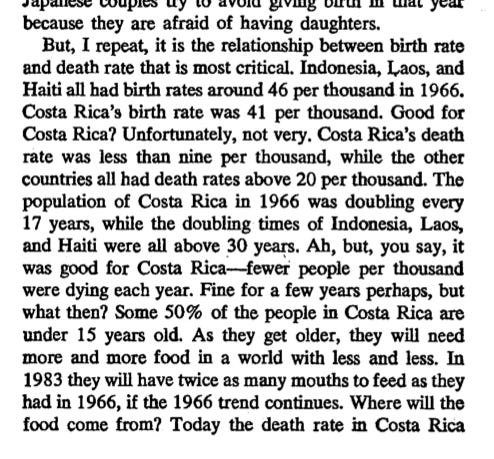
The largely prosperous world since the publication of his book seemed to not shake his core beliefs. See the below tweet from Ehrlich, which was posted in 2023. There are a few key points here: it is clear that history did not update his priors despite. He points to his “peer review” as a point that. But there’s peer review work for almost every single side of almost every single issue. Peer review does not equal correct. This is also not how peer review works; only those who need to feel superior will claim that “well my peer reviewed paper says this, so it is unequivocally true.”

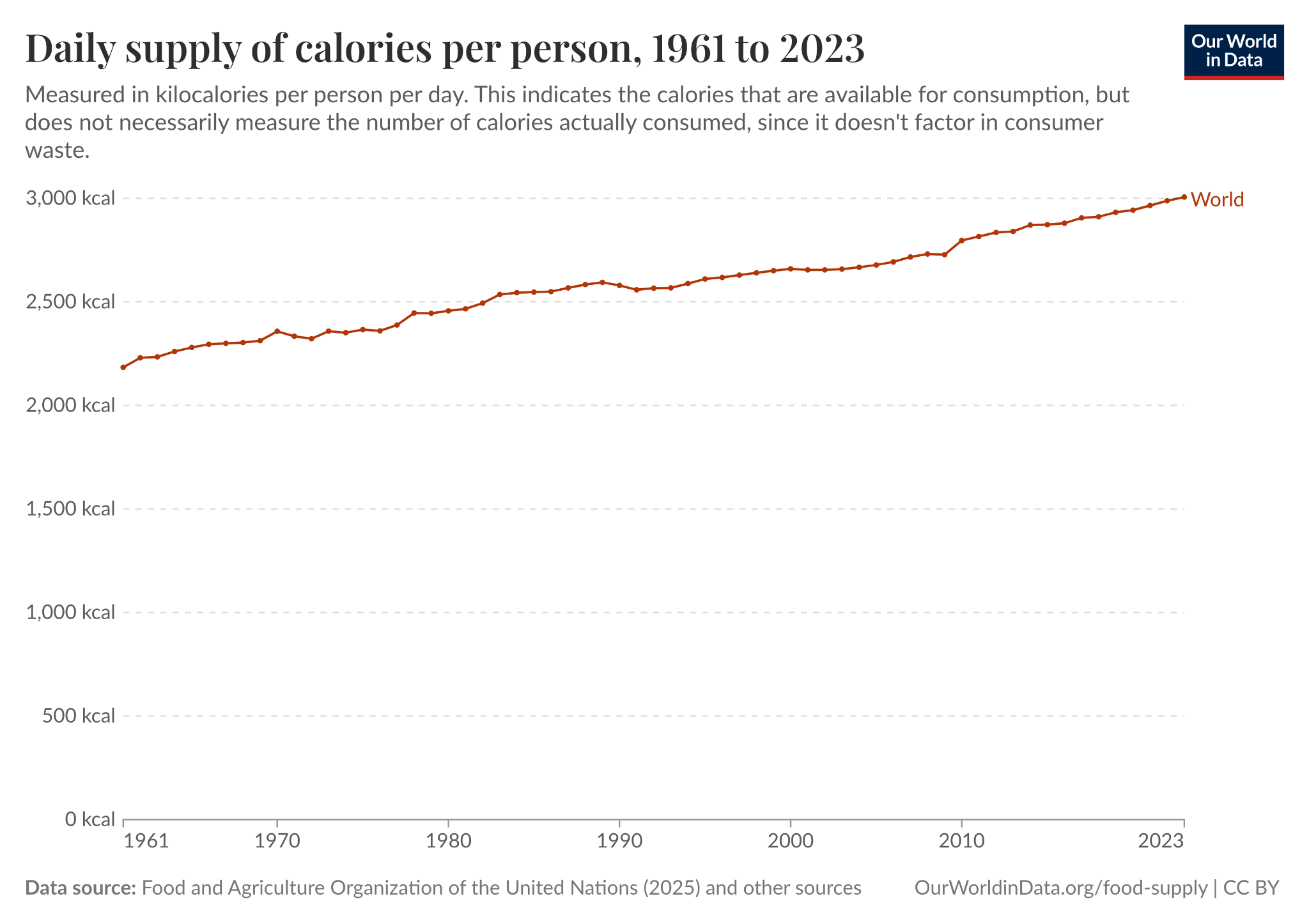
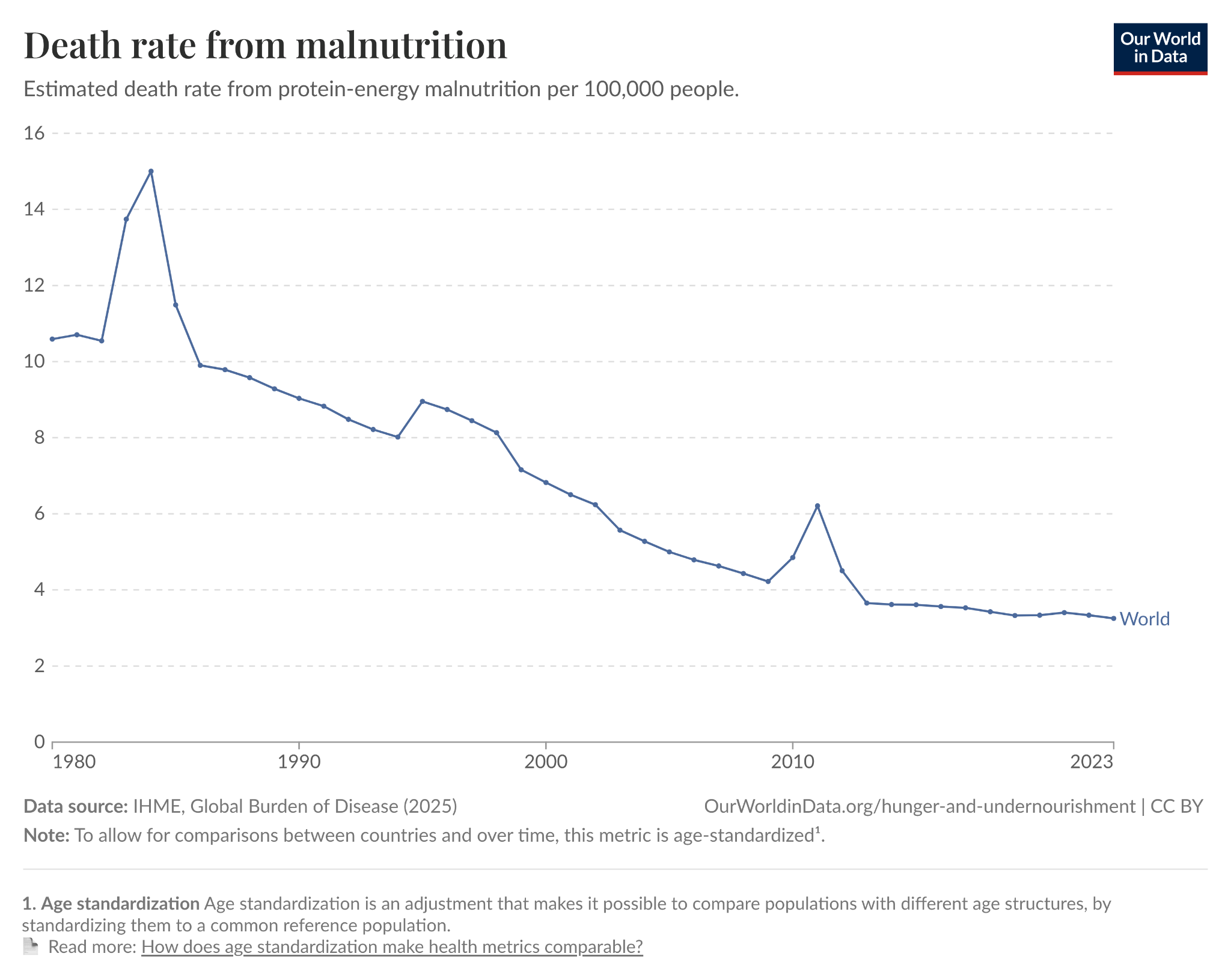
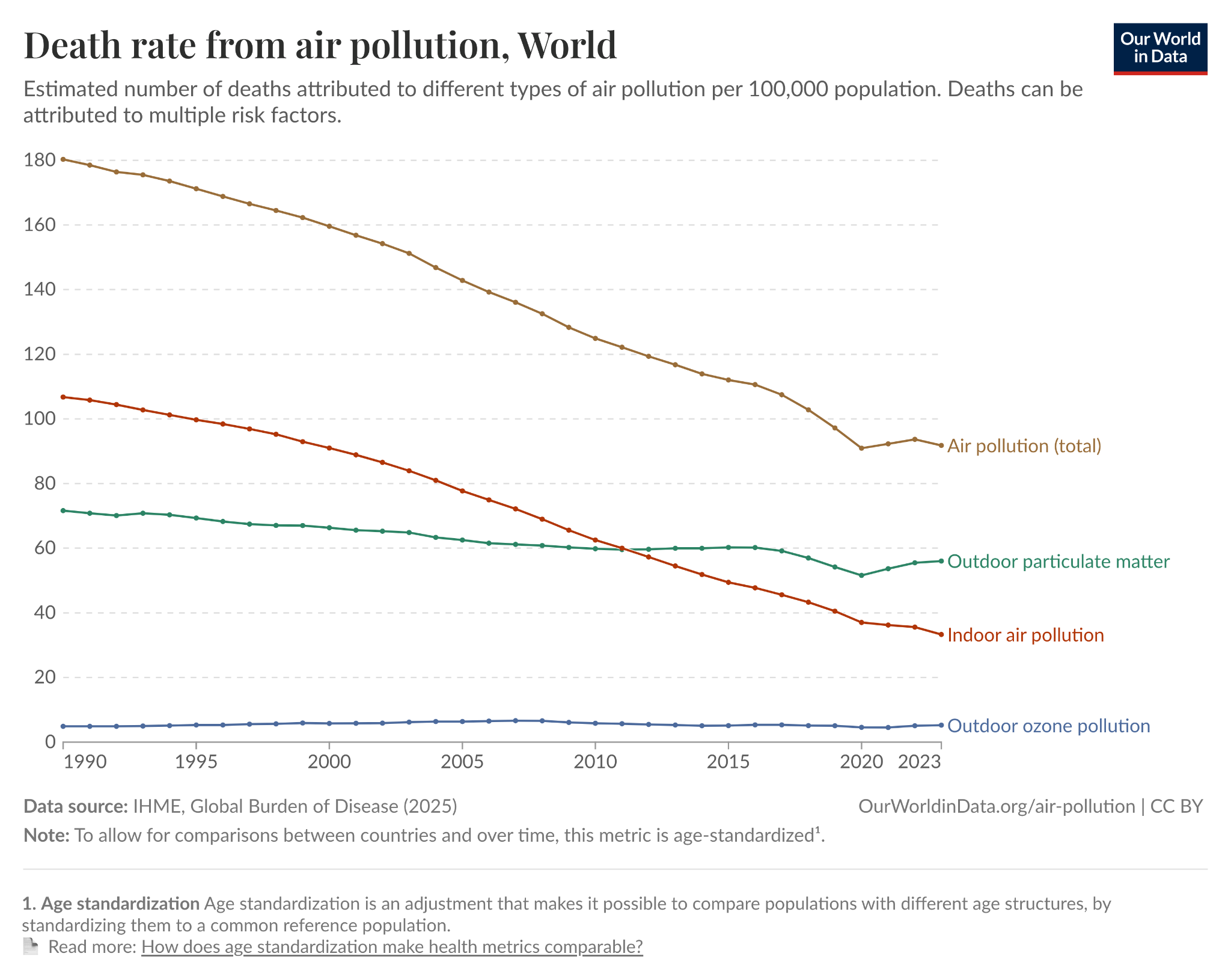
What is abundantly clear is that he still believed his position was correct. He says he has made no basic mistakes, which is simply wild. He has gotten almost every single prediction wrong, and even his basic claims proved substantially incorrect. Deaths from air pollution and malnutrition have plummeted, and the number of calories eaten per person has increased.
Again, I do not wish to speak ill of the dead, but it is worth noting that he had some truly vile policy prescriptions to solve this imaginary issue. He called for blocking food assistance to poor countries and instead force them to adopt sterilization. He said the FCC should make sure large families are treated in a negative light on television, called for the President to say that anyone having more than two (but ideally one) children is unpatriotic and not intelligent, or have the government even direct how many children one should have. (I take it he was a fan of China’s One Child Policy)
No matter how many times history proved Ehrlich wrong, he moved the goal post and “imminent collapse” date. Despite losing the bet to Simon, he never altered his priors and kept failing to believe in the “Ultimate Resource”, humans. Humans have an incredible ability to adapt and innovate.
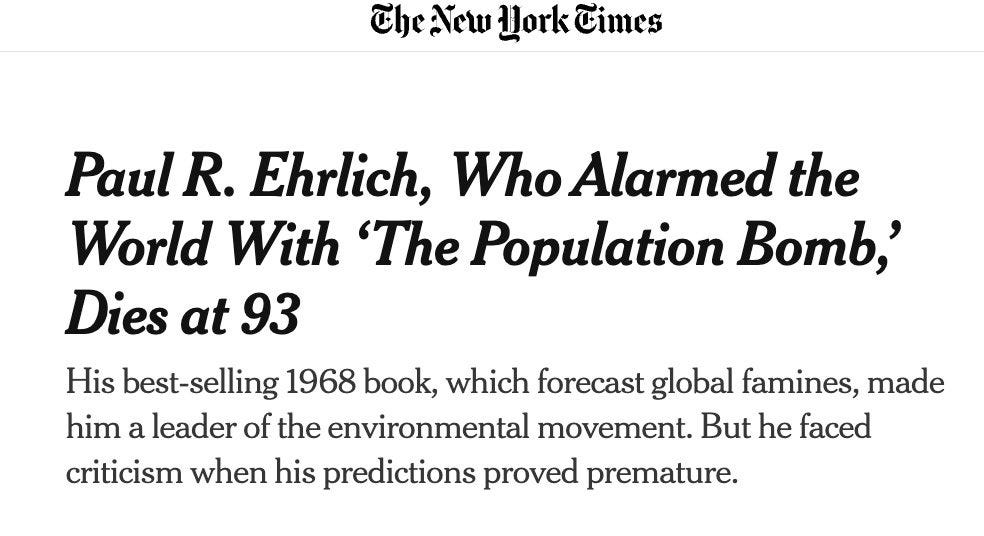
This is not just pointing out silly arguments from him, but also part of a broader movement that still believes his line of thinking. The New York Times called his predictions “premature”, not wrong. At some point, you become the boy who cried wolf. It’s the equivalent of economists who have predicted 20 of the past 3 recessions, except in those cases, at least there were some recessions. Ehrlich’s ideas are alive and well, despite the facts proving his entire thesis false.
I’m reminded of this WSJ letter to the editor from this man, who took Ehrlich’s ideas seriously and acted accordingly.
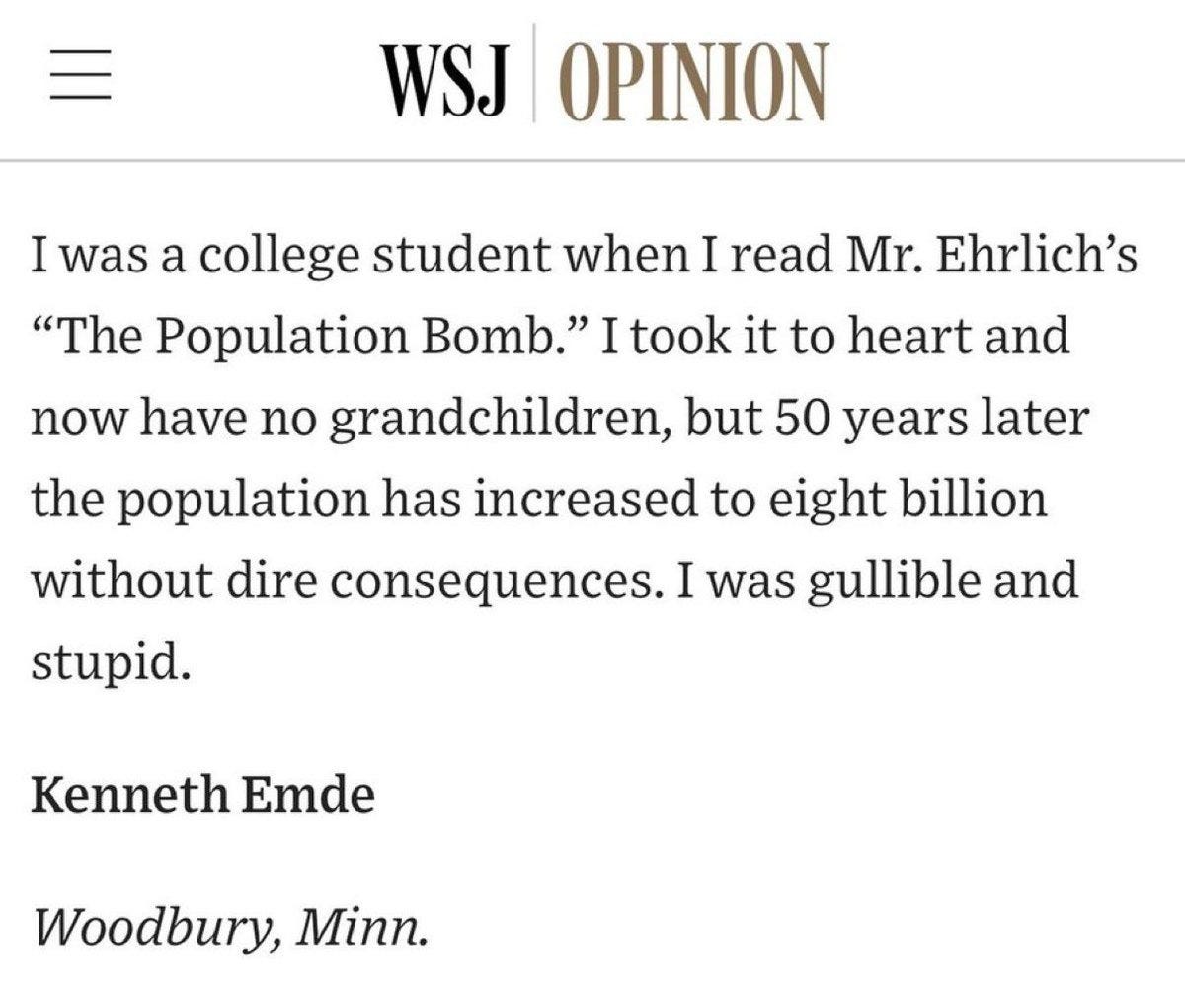
This somber story is a reminder of a few things. One, bad ideas from prominent figures, if taken seriously, can have real-world consequences. I hope this is a gentle reminder to all public intellectuals that pushing large-scale interventions is a dangerous path, especially those whose words and ideas can lead to action in the political sphere. Second is the ability to admit when one is wrong; the words “I changed my mind” or “I don’t know” are important. Unfortunately, many who have been coined as an “expert” are then given the ego boost to believe they have the answers to any and all questions. This can be dangerous even if it is in “your field of expertise” (as Ehrlich shows), but can also be damning when you are then asked to express views on topics you are not well-versed in. This is perhaps one of the most crucial but not-discussed points about politicians: they seem to have a policy solution for everything. They have concocted some solution to every single problem, despite it often being outside their own area of expertise.
By the way, if there’s anyone out there who wants to take Ehrlich’s side of the Julian Simon bet, I’m happy to take Simon’s side.